
If you earn rental income from a property in Thailand, that income is taxable in Thailand — whether you live here or not. That part isn't new. What has changed is how seriously it's enforced.
The Thai Revenue Department has spent the last few years digitising: e-filing, electronic withholding tax records, systems that talk to each other. Rental income that once slipped through quietly is now far easier to trace, and holiday rentals in destinations like Phuket are firmly on the radar.
Here's what the rules actually require:
- Rental income earned in Thailand is subject to Thai tax — regardless of where you live or where the money is paid.
- If you're a non-resident owner, your property manager may deduct a standard 15% Thai tax deduction from qualifying rental income. This deduction is used to settle the applicable Thai taxes relating to the rental income in accordance with Thai tax requirements.
- For Thai tax residents, the applicable tax treatment will depend on your individual circumstances.
- You're then expected to file an annual Thai tax return, where your actual liability is worked out properly.
That last point matters more than most owners realise, because withholding tax is not your final tax bill. It's a payment on account — and once you understand that, the whole picture changes.
How it works in practice
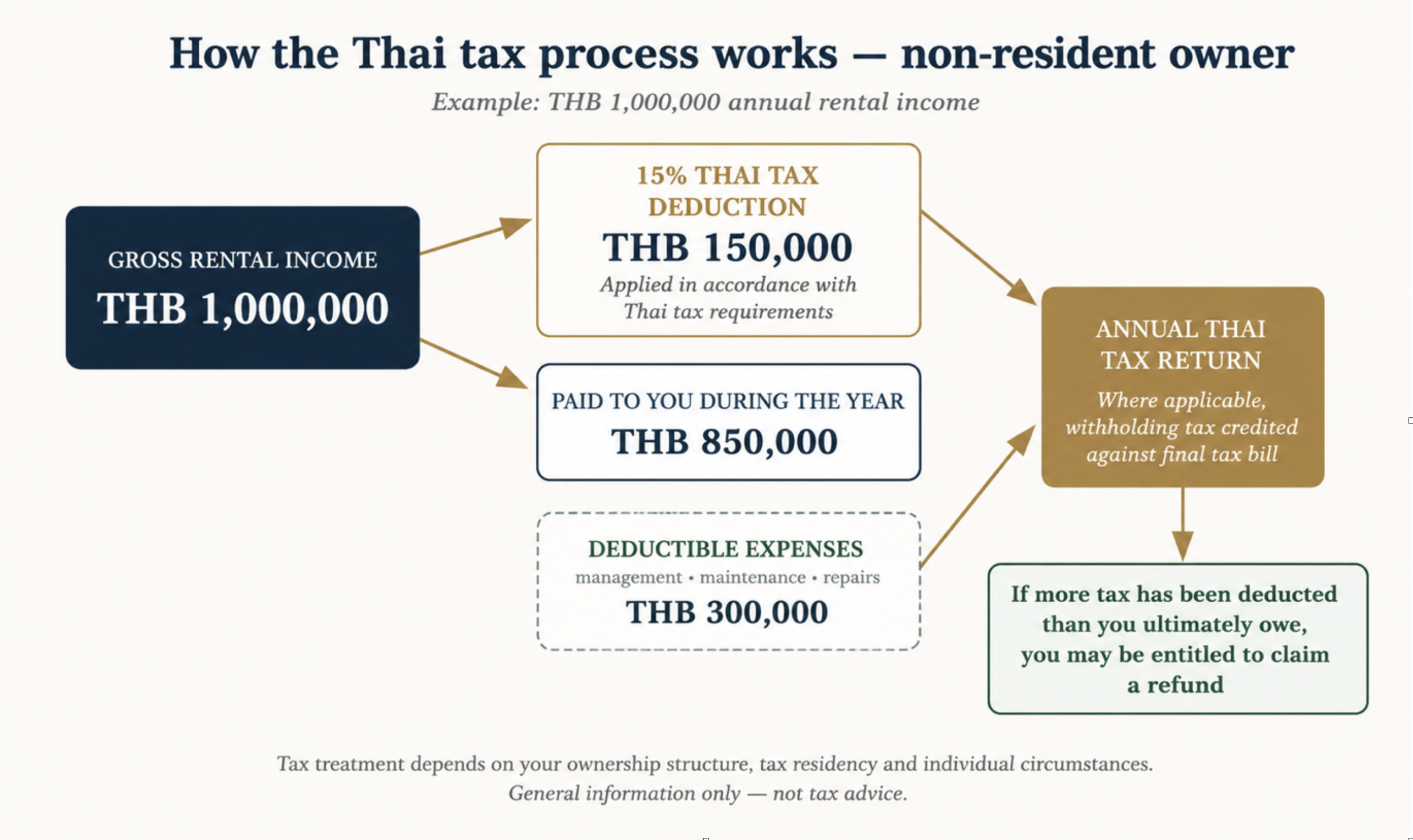
Say your Phuket property earns THB 1,000,000 in rental income over a year.
As a non-resident owner, a THB 150,000 Thai tax deduction is made from the rental income and used to settle the applicable Thai taxes in accordance with Thai tax requirements. You receive the remaining THB 850,000 during the year.
The numbers, non-resident owner:
Gross rental income — THB 1,000,000
Thai tax deduction (15%), used to settle applicable Thai taxes — THB 150,000
Paid to you during the year — THB 850,000
Deductible expenses (management, maintenance, repairs) — THB 300,000
At year end — expenses reduce your taxable income, and where withholding tax has been remitted, it may be credited against your final Thai tax position. If it's more than you owe, a refund may be claimed.
Now say you've spent THB 300,000 that year on legitimate deductible expenses — management fees, maintenance, repairs and so on. When you file your annual return, those expenses reduce your taxable income, and the withholding tax component already deducted is credited against whatever you actually owe.
For plenty of owners, the tax deducted during the year turns out to be more than their final liability — which means a refund. For others it's roughly right. Either way, where withholding tax has been remitted, it may be credited against the owner's final Thai tax position. The tax deduction is a stage in the process, not the outcome. Handled properly, Thai tax is simply part of the running of the property — not a reason to leave a good rental asset sitting empty.
The catch: none of this happens by itself
You only get to that outcome if the paperwork behind it is right. Applicable Thai taxes calculated correctly. Remitted to the Revenue Department on time. Supporting tax documentation issued where applicable. Complete financial records kept all year. Everything ready to hand over when your annual return is due.
Miss any of that and claiming what you're owed gets a lot harder — and with the Revenue Department's systems increasingly joined up, gaps in your records don't stay invisible the way they used to.
This is the side of property ownership nobody photographs. It never gets a mention in a five-star guest review. But it's the difference between owning a Phuket holiday home that feels effortless and owning one that turns into a second job.
How your property manager should be handling it
None of this should fall on you to chase. A property manager operating properly builds tax administration into the service as standard:
- Applicable Thai taxes calculated, deducted and remitted to the Revenue Department in accordance with Thai tax requirements
- Monthly owner statements together with supporting tax documentation where applicable
- Complete, accurate financial records for the property, kept all year round
- Everything needed for the annual Thai tax return, handed over in one package
At Pearl Property, this is why we treat the administration as seriously as the bookings. Your property performs, your guests have a great stay, and the paperwork quietly happens in the background — so you can enjoy the benefits of ownership from anywhere in the world.
If you're not certain that's how your property is being looked after today, it's worth asking the question.
This article is general information, not tax advice. Tax treatment depends on your individual circumstances — always speak to a qualified Thai tax adviser.
Pearl Property Insights is where we share practical observations to help owners get the most from their Phuket property investment.