
Missed the live sessions? Watch the full webinar replay below — recorded for Phuket property owners and investors.
This is the 10:00 am session recording. The webinar also ran at 4:00 pm with a different live Q&A.
Watch the 4:00 pm Session →Whether you own a villa or condominium in Phuket, understanding what drives rental performance is key to maximising your investment. In this complimentary 45-minute webinar, Pearl Property Phuket shares practical insights into today's Phuket short-term rental market and the factors that distinguish high-performing properties.
Whether you currently self-manage your property or work with an existing management company, you'll come away with practical ideas to help maximise your property's performance.
Russell: Hello and welcome to the webinar, Is Your Property Performing as Well as It Should? This webinar is hosted by our team at Pearl Property Phuket, your trusted partner for investment, management and lifestyle property services. Thank you for joining — we've had an incredible amount of interest in this event, and given that level of interest I'm sure we'll be running this as a series in the future.
Russell: Let me start with some introductions. We have three presenters today: myself, David and Wara. David leads sales, business development and owner partnerships at Pearl. He's been working in the property market for around twenty years, advising on all aspects of investment and management, with extensive knowledge of both the investment and rental sides of the market. Wara has a similar level of experience, particularly in revenue management, bookings and commercial strategy. Prior to Pearl she worked with Marriott, Starwood and other large-scale operators, and she leads Pearl's bookings and revenue management stream. My own role is around business operations and overall direction — roughly a quarter of a century of experience in managing and developing the systems and processes required to pull it all together.
Russell: Today we're going to talk about what we see in the market: how properties can maximise returns, and how owners can protect their investments, particularly around rental management. We'll cover what we see as leading practice — the four pillars of rental management — and leave you with ten key questions to think about, before finishing with a live Q&A.
Russell: There are a lot of villas and condominiums in Phuket, and some of them are very high quality. But you can have essentially the same villa and end up with very, very different results as the owner and investor. Let's take an example. Villa A: a very nice villa, private pool, fantastic amenities. Perhaps it's performing at a guest rating of 4.5 out of 5 and occupancy of around 50–52% — average or poor-to-average numbers — with rental income that's not as strong as it could be. Critically, perhaps the owner isn't clear on why that's happening, or on the status of some of the administrative aspects of running the property.
Russell: Now take a different villa — essentially the same, similar location, similar amenities, same size and quality. Guest rating 4.9 out of 5, occupancy well over 70%, higher rental income, and the owner has full clarity and transparency on why that's happening and how their return on investment is being managed. What contributes to that difference? These are real examples, by the way — everything we're presenting is what we see in the market directly.
Russell: First, pricing. The villa on the left has its pricing checked infrequently — maybe every few weeks or couple of months. The villa on the right has pricing checked and managed on a day-to-day basis. It's a very dynamic environment in Phuket, and staying on top of pricing makes a huge difference. Second, the listing itself. Often the photos are average — perhaps not professionally done — and the listing copy matters too: is it too long, too short, does it cover the local area, is it clear and attractive? Top-performing villas and condominiums always have professional photography and compelling listings. Third, response times — responding to booking enquiries and to guests during their stay. If you respond instantly and make guests feel well looked after, there's a definite correlation with performance. Fourth, cleaning and maintenance: not just consistent plans, but managing to quality, so the guest knows exactly what they're going to get when they book — and gets exactly that when they stay. And finally, the owner side. The villas that perform best tend to have owners with very clear reports, who know exactly where they stand on tax and withholding tax, and whose payouts arrive on time.
Russell: David, you talk to owners in the market daily — what are you seeing?
David: I talk to owners on a daily basis, and there's no question it's been a particularly tricky year, bearing in mind we had a very buoyant market post-COVID during the Russia–Ukraine war, when demand was through the roof. There are three main types of owner I speak to. First, the brand-new owner who bought off-plan a couple of years ago and is now taking handover of their villa — and suddenly it dawns on them: "What do I do now? I need someone to take care of my villa." They may have spent a million dollars on it, so it's a huge investment. Second, people with an existing property whose lifestyle is changing — travelling in and out of Thailand — who are looking for a property manager. And third — probably the main group — owners with an existing property manager who, how can I put this, just isn't performing. It was fine when rental demand was high and the rising tide lifted all the boats. Now the market's got trickier, and it's exposed a lot of them. I suspect that's why many of you are here today — to find out how to fix those faults.
Russell: Given what we see in the market, how do we organise and structure our thinking? We use what we call the four pillars — the things top-performing properties consistently do to earn strong guest reviews, market-leading revenue and high occupancy.
Russell: The first pillar is attracting guests. We can talk about management all day, but first we have to be visible and find ways to entice high-value guests to stay in our properties: professional photography sets, dynamic pricing, and wide exposure across OTAs — online travel agencies like Airbnb and others. Wara, can you talk about what top-performing properties do here, particularly around pricing?
Wara: Thank you, Russell, and good morning everyone. First, photography: for all our properties we work with professional photographers and make sure that imagery is visible on every platform. On dynamic pricing, we look at the price every day — often more than once a day — because the market changes a lot. We watch how the market is performing, our competitors and our neighbourhood, and adjust the price according to demand. We don't set the price once a week or once a month; we look at it consistently. On the wide OTA approach, we make sure we partner with all the key OTAs, because every OTA has its own database. We use their market intelligence, work with their market managers to understand movements, and adjust accordingly.
Russell: Thank you, Wara. Just to add on platforms: there are many ways to sell villas and condominiums in Phuket. Airbnb is the one everybody knows, as are Booking.com, Agoda and the rest. They all have different attributes and specialise in slightly different markets, so the right mix depends on your plan and the type of villa or condominium you have. We also recommend focusing on direct bookings where you can — it's a way to balance the commissions agents take.
Russell: The second pillar is converting bookings. Once you've got interest, you need to respond to enquiries fast — sometimes instantly. In Phuket these days people often book very last minute, and even when they don't, they might be looking at three or four other properties at the same time. Your ability to respond quickly and address the enquiry — whether it's about price or anything else — is really important. You also need strong reviews: top-performing properties consistently earn them, and people read them. And if issues are raised, respond to them — online or directly with the guest — so they feel heard. Finally, competitive offers aren't just about price. It's about having something meaningful people want to book — combining the rental rate with extras like airport transfers — so guests feel they're getting a good deal, and actually are.
Russell: The third pillar is delighting guests. From the moment they book to the moment they travel home, the whole experience should be delightful. That means clear, fast communication. It means a well-maintained property — and we use the word proactive deliberately: 90% of the things that go wrong with properties in Phuket can be predicted and managed proactively. Air conditioning can be cleaned and serviced; issues can be planned for. It's about making sure problems don't occur in the first place — and responding fast when they do. And it means consistent quality: from the moment the guest arrives, the villa should look and feel like the place they booked. All of this makes guests comfortable, confident and likely to book again.
Russell: The fourth pillar is protecting your investment. It's all very well having the property managed and the guests looked after — but you, the owner, need to be looked after too. David?
David: You used the right word there, Russell — confidence. And trust. If you're an owner who's not in Thailand, coming in and out maybe once or twice a year, you need to be absolutely certain your property is being taken care of, because this tropical environment can be brutal to villas. If they're not looked after, they go downhill rapidly. A competent property manager protects your investment — and means you can earn money while you're not here. It doesn't make sense to leave your property empty, open to the elements and not earning. It's an investment; it's supposed to make a return. Communication is crucial too. If you can't get hold of your property manager to ask simple questions, get simple answers, or even make a booking for yourself or your family, it's probably the most frustrating thing I hear about. We pride ourselves on responding extremely quickly — owners know they can reach me pretty much any time. I'm their boots on the ground. And we're talking about million-dollar villas here — it's very important they're taken care of.
Russell: I'll build on that briefly, specifically on tax and withholding tax. For all villa and condominium owners in Phuket — indeed in Thailand — you really must be compliant on tax. For our part, wherever we manage properties, we manage that 100% for owners. Making sure the correct withholding tax is handled and that you're compliant with the rules in Thailand has become more and more important over the last few years, particularly right now.
David: Sorry to interrupt, Russell — I speak to owners a lot, and very few understand the concept of withholding tax. It's probably a boring subject, but if you don't take care of it, it will come back and bite you. A lot of property management companies are just ignoring it — and when it comes to the tax authorities, you can't.
Russell: Absolutely right. When we were marketing this webinar, we said it's not rocket science — and that was deliberate. Every single item we've covered sounds obvious and straightforward on its own. The challenge is to execute it well and execute it consistently. Get the basics right.
Russell: To conclude the presentation, here are ten key questions you ought to be asking yourself as a property owner. How you answer them should tell you a lot about whether your villa or condo is top-performing — or whether there's work to do.
Russell: On attracting guests: One — is my pricing being reviewed regularly? Phuket is dynamic, with a distinctive high season, low season and shoulder months, and the only way to get the best revenue balanced with occupancy is to look at it consistently. Two — is my property being presented to its full potential? Look at your photography and listing copy, and compare it with other listings. Three — am I reaching the right booking channels? There's not just one way to sell space in Phuket.
Russell: On converting bookings: Four — are enquiries being responded to quickly? Whether you self-manage or use a property manager, in our mind that means responding instantly wherever possible. Five — are enquiries actually converting into bookings? Not every enquiry will, but you should expect a good proportion to.
Russell: On delighting guests: Six — are guests consistently leaving excellent reviews, or are they mixed? Seven — is my property proactively maintained — preventing problems, not just reacting to them?
Russell: On protecting your investment: Eight — do I receive clear reporting, with full visibility of what's happening with my property? Nine — am I absolutely clear on the rules for withholding tax, and is it being handled correctly by my management team? And ten — do I know what needs to be done to make the property better, and is it being done? No property is perfect — but you should know the plan. Depending on your answers, you might want to look at things more closely — or you might feel 100% confident everything is working as it should.
David: In the last few years there have been a lot of changes. At the end of COVID, everyone in Phuket was wondering what would happen. Then the Russia–Ukraine war kicked off and we were swamped by demand from Russian nationals coming to stay and live here. Demand went absolutely crazy — perfect timing for Phuket, because it got us back on the map — but it skewed the market markedly. We had no low season; everything was demand, demand, demand. Things often didn't even make it to market. This last year has been trickier, and I hear the gloom merchants saying it's the worst low season ever. It's not. It's simply the low season — the market has returned to a normal cycle after two years of parabolic demand. Has it been affected by the Middle East situation? Of course — flight prices matter for demand into Thailand. But what I've noticed, in this cycle and previous ones, is that demand to come to Phuket doesn't go away. People who love Thailand sit and wait; the pent-up demand tightens like a spring, and once they can come, it floods straight back. I'm fully expecting that this high season. As for how it's affected owners and property managers: a lot of management companies weren't prepared for a return to a normal market. They thought the demand would last forever, so they didn't need to be professional — demand was just there. Now you have to fight for customers. The good management companies will keep occupancy up; the less professional ones are struggling, and I'm speaking to a lot of owners experiencing significant problems who are looking to switch.
Wara: Very good question — it's always chicken and egg. I'd say it depends on the period and the season. During high season and peak season we don't have any issue with demand, so we can expect high occupancy and high rates. In the shoulder and low seasons we need to play more carefully: rates need to be very competitive with the market while we try to fill occupancy. In a nutshell, we play by season, by period, and by market demand — during high demand we drive both occupancy and ADR; during low demand we're more flexible on the selling rate and capture as much occupancy as we can.
Russell: Excellent point. What we're always doing for owners is looking at total revenue performance — a calculation of nightly rate multiplied by occupancy. Push the rate too high in the wrong season and you'll make less revenue. We dynamically manage that balance across low, shoulder and high seasons for different properties.
Wara: To add: we look at your performance across the whole year, divided by month and period. Roughly 30–35% of your revenue comes in during low season, with the rest in high and peak season. We know which periods let us maximise revenue for you, and which periods require flexibility — but overall we look at the big picture to maximise the opportunities.
Russell: There are multiple ways to sell. You can use OTAs — the famous ones like Airbnb, plus Booking.com, Agoda, Expedia and others. You can sell directly, and there's also quite a big agent network across Phuket for private rentals. Which are best? It depends on how you want to position your property. Airbnb is very strong here and accounts for a large part of the market, but the others are present too — Booking.com particularly for Europeans, and Trip.com/Ctrip increasingly strong for the Chinese market. It's a question of which audience and target market you want to reach — and I'd suggest not relying on a single platform. On direct bookings: we have our own bookings page for all our properties, so on any given day we can take a booking directly or through an agent, and people do find us. But it requires marketing. OTAs charge high commissions, but they do the heavy lifting of marketing for you — there's a reason they're dominant. It's a balance.
Wara: One thing we're also proactively working on is mid-term rentals — stays of two to three months — which help fill the low and shoulder season months when demand is lower. We work with platforms that specialise in that space. And as Russell said, we don't rely on a single OTA: we use the market intelligence each OTA and market manager shares with us, and join campaigns each OTA provides to make sure we cover all demand.
David: It can be quite confusing comparing property management companies, because it's all about what's included. You'll get quoted anything from 50/50 revenue share, 80/20, 70/30, 15% — a wide range. The average is around 30%, and that's where we are, but we include everything in that. I often see 80/20, which is interesting because the 20% is usually "plus plus" — you'll pay extra for housekeeping, extra for laundry, extra for bookings. Hidden charges push up the real cost, because 20% simply isn't a commercially viable rate for a property manager. 30% is about right — it's a low-margin business that runs on volume. When picking a management company, it's all about confidence: really dig into what's being provided for your money.
David: On rental guarantees: this is a tricky one, and I have to say it — I don't like them. I think a lot of them are bogus. They're designed to win your business, but then the company can't deliver on the promise. They'll say "the long-term rental price is X, we'll guarantee that and do better" — but it's not a realistic model. If they're making a guarantee, what does it actually mean? Will they make up the shortfall if they miss the target? Can they? How? Too many questions. I prefer to look at the market in reality and talk to owners like grown-ups. With a professional management company you shouldn't need a guarantee — you should be able to track your income monthly. Seasonal variations apply, of course: lower income in low season, a lot higher in high season. Average it across the year and you get a clear picture of what your property should return. Realistically, you should be looking at a 6–8% net return — it can do better, but 6–8% is realistic.
Russell: Withholding tax is nothing new — it's been around forever, and the reason you have to pay it is that it's the law in Thailand. What you need to understand is that withholding tax is a tax paid on rental income up front — it's not your final tax position at the end of the year. When you file your tax return, what you've paid as withholding tax is effectively a tax credit against your final position. Could you get away with not paying it? Maybe once — but it's not recommended, and not any more. Enforcement in Thailand, not least on tax and withholding tax, is becoming much stronger. For our company, we handle withholding tax for all owners on all properties. Who's responsible for paying it? Effectively, the property manager pays it on the owner's behalf — but it goes to the owner's tax account, which is the important point. We do it on behalf of owners, and where we can, we help them complete their tax return at the end of the year. And yes, the percentage rate differs depending on residency — usually either 5% or 15% — but either way, it needs to be covered.
David: Selling your property while renting it out is actually a very good way of putting it into the market. The best people to market it to are the people renting it. Very often guests are second or third-time visitors to Phuket. It usually follows a cycle: they come for the first time and fall in love with the place — and who wouldn't? The second time, they realise they were right the first time. By the third visit they're thinking, "Maybe we should have our own place." They're the perfect people to market a property for sale — they booked your place and loved staying there, so why wouldn't they look at it? From my perspective it's also a great lead-generation tool: a constant stream of people looking to buy in Phuket, and it's down to me to position the right property to the right client. And if we sell your property, we'll look to rent it out for the new buyer too — so there's no disincentive for us; it's continuity. Can you still use it while it's rented out? Of course — it's your property. Come and use it as much as you want. Most owners come in low season because they don't want to affect the big high-season income, which makes sense — typically a month a year, maybe a couple of visits. But remember: if you come in high season, you'll be affecting your revenues, and your average return at the end of the year will be lower.
Russell: Typically high season is deemed to run from around November to April, or Songkran. In fact it ramps up towards a super-peak around January, then after Songkran it drops back to low season. Each month is treated slightly differently — when we market properties we look at every individual month through the year — but there really is a big low season and high season, and you have to factor that in.
Russell: Yes, they can — it depends on the specifics. Sometimes there are particular circumstances around a villa or condominium that affect how arrangements are set. We treat everything case by case and work with the owner to make it suitable for their situation.
Russell: We've covered an awful lot of ground in a short period — we could probably talk for another hour, but we should stop there. Thank you to everybody who joined; we really appreciate it. If you'd like to pick up on any topic we've raised, you're more than welcome to reach out to us — for anything relating to getting the best out of your villas and condos in Phuket. Thank you very much, and enjoy the rest of your weekend.
The session concludes with a live Q&A, where owners asked questions about their own properties and the Phuket rental market — all included in the replay above.
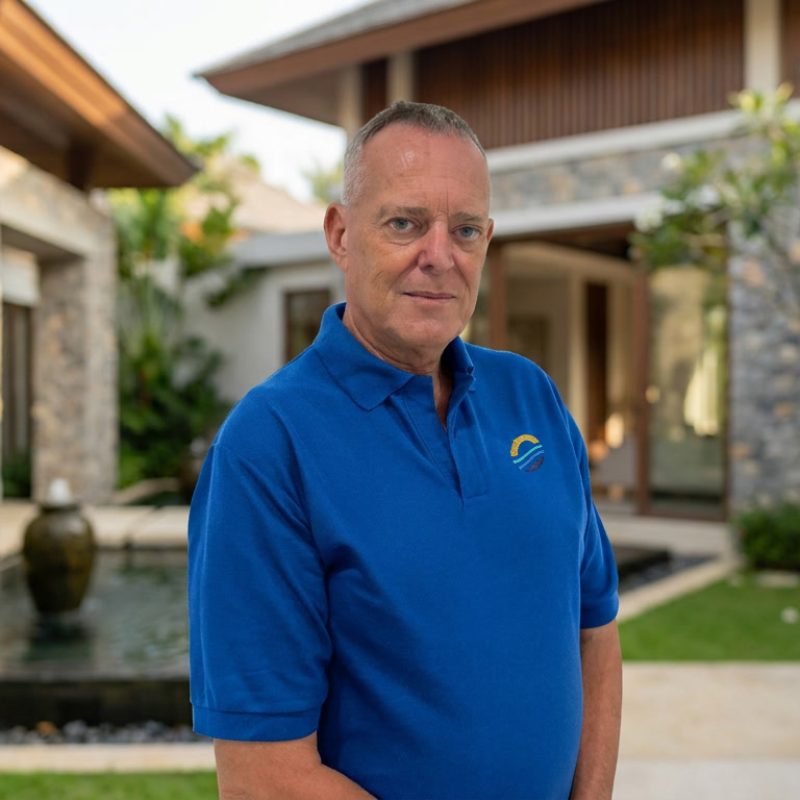
David leads sales, business development and owner partnerships at Pearl Property Phuket. With almost 20 years in Phuket's property market, he has advised on luxury villas, condominiums and investment properties across the island.
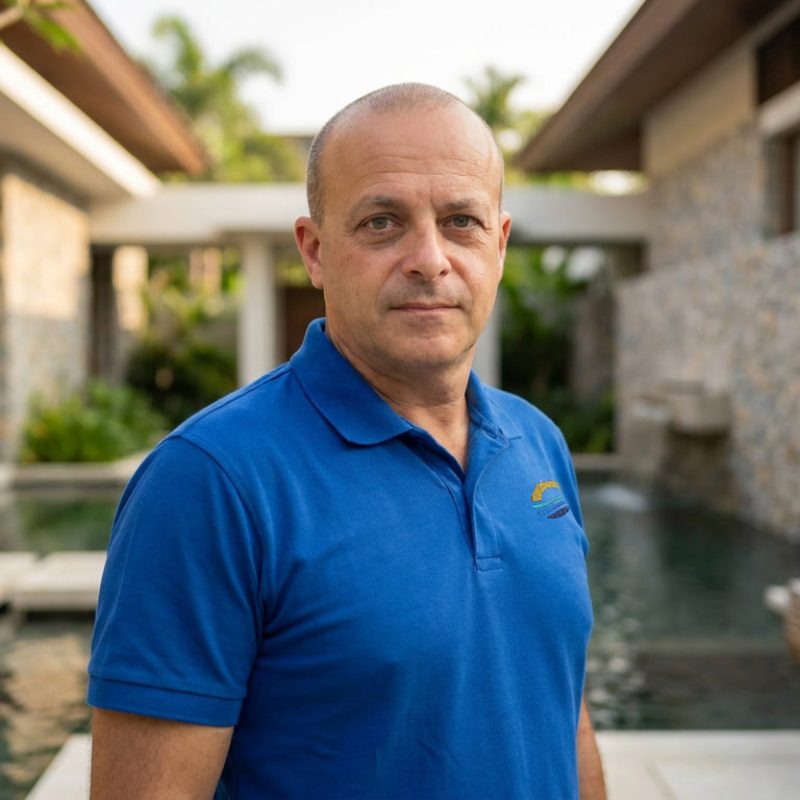
Russell leads the Company's strategy, operations and business development, with more than 20 years' international experience in leadership, finance and business growth, including senior roles with global consulting firms and listed companies.

Wara has almost 20 years' experience in rental revenue management and commercial strategy, with senior roles at Marriott, Starwood, Accor, ONYX Hospitality, The Standard and Royal Cliff Hotels. She specialises in pricing, revenue optimisation and distribution strategies that maximise occupancy and rental income.

Benjawan has almost 20 years' experience in finance and hospitality operations. She oversees owner services, financial controls, owner payments, tax administration and compliance, helping ensure owners receive professional financial support and a seamless ownership experience.
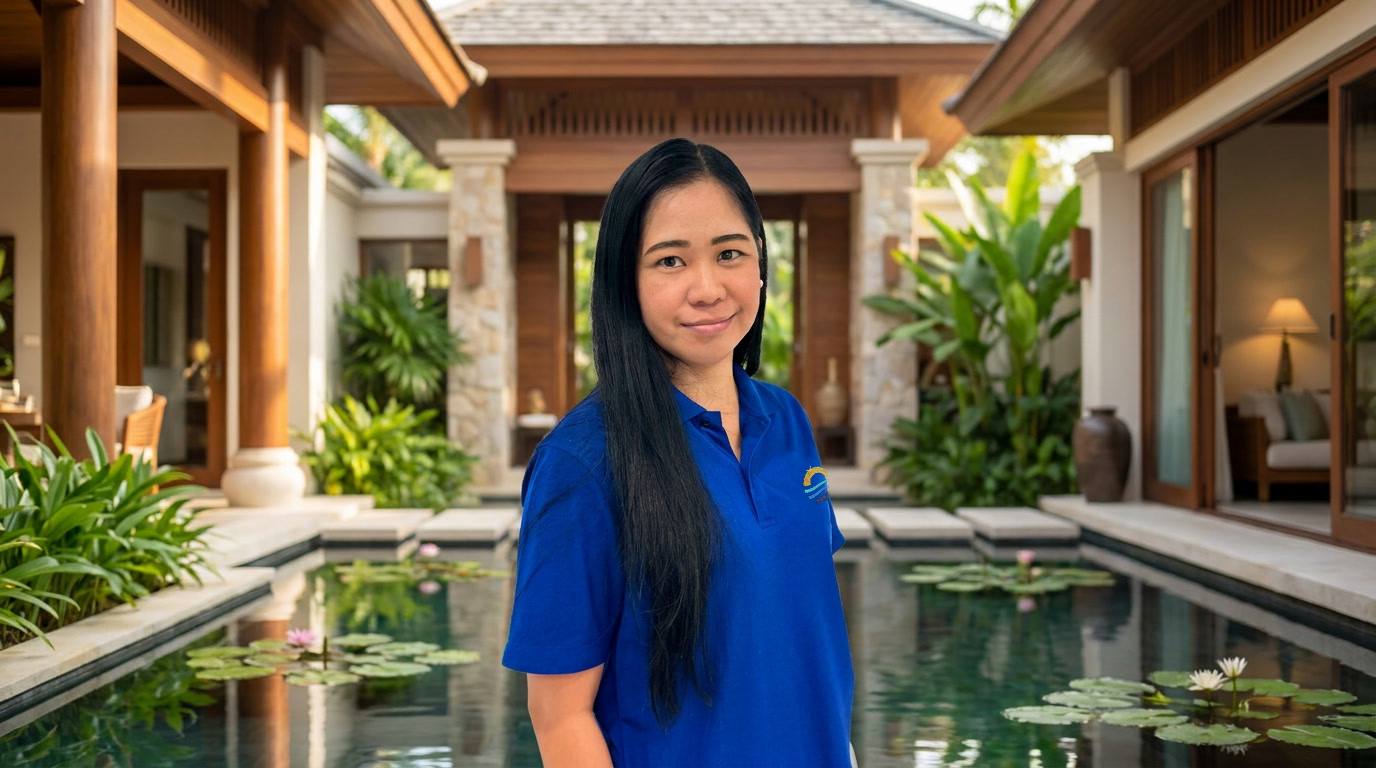
Lea has more than 15 years' experience in hospitality and guest services, with responsibility for owner administration and financial support. She oversees rental accounting, owner statements, expense management and day-to-day financial administration, helping ensure owners receive accurate, transparent and timely financial information.
Hover over (or tap) a presenter to read their bio.
If the webinar raised questions about your own villa or condominium, our team is happy to help — no obligation.
Talk to Our Team Free, no-obligation consultation for Phuket property owners