
Is Your Phuket Property Performing As Well As It Should?
Missed the live sessions? Watch the full webinar replay below — recorded for Phuket property owners and investors.
This is the 4:00 pm session recording. The webinar also ran at 10:00 am with a different live Q&A.
Watch the 10:00 am Session →About This Webinar
Whether you own a villa or condominium in Phuket, understanding what drives rental performance is key to maximising your investment. In this complimentary 45-minute webinar, Pearl Property Phuket shares practical insights into today's Phuket short-term rental market and the factors that distinguish high-performing properties.
Whether you currently self-manage your property or work with an existing management company, you'll come away with practical ideas to help maximise your property's performance.
Introduction
Russell: Hello, and good afternoon or good morning depending on where you are. First of all, welcome everybody to this webinar — Is Your Property Performing as Well as It Should? — hosted by Pearl Property Phuket, your trusted partner for investment, management and lifestyle property services. We really appreciate everybody joining us today. We've had a great deal of interest in this topic, particularly around rental management for owners and investors, so we're very happy to share our experience and discuss as best we can.
Russell: Let me introduce the speakers for today and what we're going to cover over the next three-quarters of an hour. We've had various speakers across the sessions we've been running; today we have David and myself, Russell. David has more than 20 years' experience in the Phuket property market, advising on luxury villas, condominiums, investment and management services, with extensive local knowledge. Within Pearl, he leads our owner relationship management, making sure owners are up to speed and that we're addressing their needs on a regular basis — so a great person to have on the call today. For myself, I also have twenty-odd years across Phuket and rental management in different markets, including asset management, and within the Pearl group I'm responsible for making sure all of our systems and processes deliver as they should, operationally, for our owners and guests.
Russell: So what are we going to cover today? In the first half of the webinar we want to share why, in our view and experience, properties perform differently — and in particular, talk about the way we look at what we call the four pillars.
Q&A: Withholding Tax in Detail
Russell: Your final tax position takes into account your costs — including any management fees or maintenance work done on the property — and it may well be that after paying withholding tax through the year, you actually end up with a credit or a rebate rather than a debit at the end of the year. Withholding tax also depends on your residency status: if you're non-resident it's normally 15%, and if you're resident it's typically 5%. But you can't read that as your final tax rate — that will be based on any other investments or income you might have, and various other factors and expenses. The one more thing I'd say is that, from our point of view, we manage all of that withholding tax for all of our owners across all of our properties. That may or may not be the case for other management companies, but we've always taken the view that we will be 100% compliant, and we'll support our owners to make sure they're compliant too — with everything done for them, as simply and easily as possible. It's a big topic with a lot of detail we could get into, but hopefully that's a simple way to cover it.
Q&A: How Do You Manage Low Season?
Russell: This comes back to reservations. It's definitely true that high and low season are very, very different — we've talked about the different revenue and rates. In low season we know we're likely to get lower occupancy, so we use different tactics. Of course we can reduce rates to some extent, but what we also do is look for extended bookings: we offer more competitive rates for guests who'd like to stay for one, two, three months or longer. We do that in low season because occupancy from short bookings is typically lower — so by securing longer bookings, we bring occupancy up. It's a different type of tactic, and it all plays into the idea of dynamic pricing: being able to adjust depending on how the market is actually doing.
David: Can I just add — those seasons are very important. You make around 70% of your revenues in high season, so it's important that low season contributes its 30%. What you don't want to be doing is playing catch-up in high season because you've lost money in low season and haven't hit that 30%. The longer-term bookings may not generate as much revenue in low season, but they mean you're not paying catch-up later — you start from a higher base going into high season, which increases your average revenue and your average occupancy for the year. So oddly enough, while high season is obviously the most important, managing low season is crucial.
Closing
Russell: We've run right up to our 45 minutes, so thank you very much for joining. If you have any further questions, please do reach out — you can find us at pearlpropertyphuket.com, on Facebook, LinkedIn and so on, and we'll be happy to answer anything further about rental management.
David: I'm always available to come and have a coffee and talk through what's happening in the market and what I think it's going to do. Phuket is a very strong brand. I hear a lot of doom-and-gloom merchants in the bars — all experts, of course — but in reality they're just parroting the local fashion. I hear this is the worst low season on record. It's not. All that's happened is the market has returned to its normal cycle after a period of extraordinary demand brought on by the Russia–Ukraine war, when demand really outstripped supply. We've simply returned to the normal market cycle. It's not a disaster — it's totally manageable.
Russell: Thank you once again — we look forward to talking to you on the next webinar. Have a great weekend.
What We Covered
The session concludes with a live Q&A, where owners asked questions about their own properties and the Phuket rental market — all included in the replay above.
Your Presenters
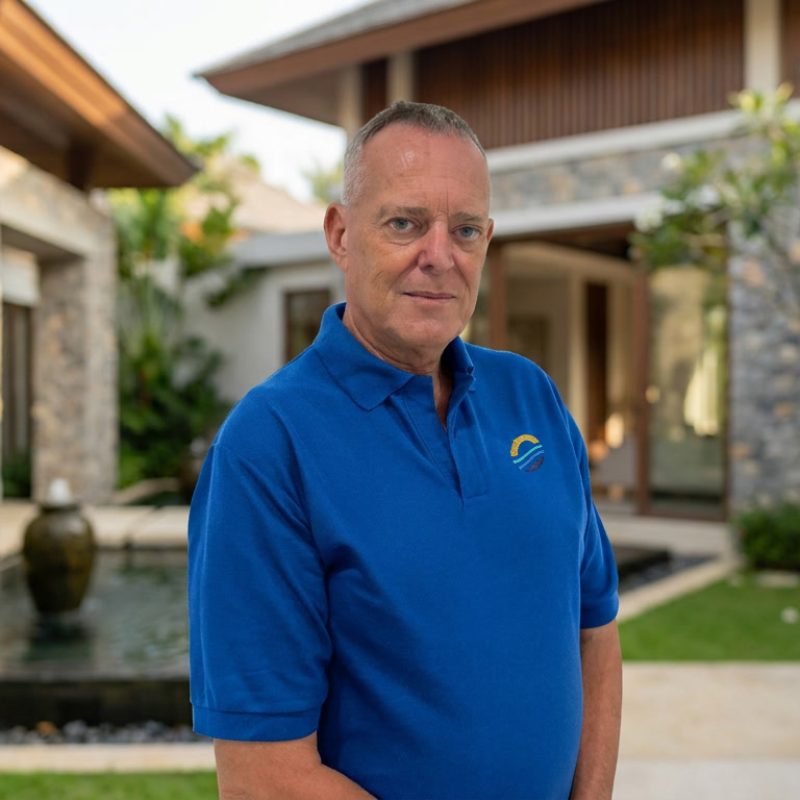
David leads sales, business development and owner partnerships at Pearl Property Phuket. With almost 20 years in Phuket's property market, he has advised on luxury villas, condominiums and investment properties across the island.

Russell leads the Company's strategy, operations and business development, with more than 20 years' international experience in leadership, finance and business growth, including senior roles with global consulting firms and listed companies.
Hover over (or tap) a presenter to read their bio.
Questions About Your Property?
If the webinar raised questions about your own villa or condominium, our team is happy to help — no obligation.
Talk to Our Team Free, no-obligation consultation for Phuket property owners